Migrate your legacy data platforms and reports
Move reports to Power BI and data platforms to Microsoft Fabric, Databricks, or Snowflake. Agentic AI accelerates conversion while your team reviews and approves every checkpoint.

Migrate from your current platform with MigrateFAST
MigrateFAST, our migration accelerator, automates the repeatable conversion so our engineers spend their time on the judgment calls.
Reporting and BI platforms
Dashboards, reports, and semantic models are rebuilt in Power BI. The work is recreating report logic and calculations, not moving storage.
- Tableau
- MicroStrategy
- Qlik
- SAP BusinessObjects
- Cognos
- SAP Crystal Reports
- Power BI
Data platforms and pipelines
Warehouses, lakehouses, and ETL are rebuilt on a modern data platform. Schemas and data move; transformation logic and stored procedures are rewritten for the destination.
- Alteryx
- Informatica
- Azure Synapse
- Microsoft Fabric
- Databricks
- Snowflake
Unifying disconnected data systems using Microsoft Fabric and OneLake
A healthcare manufacturer unified ten disconnected systems on Fabric and OneLake, cutting data onboarding time by 40% and retiring legacy licenses.
Read the story
End-to-end migration lifecycle
Discovery
Inventory assets, score complexity and similarity, and map dependencies.
Estimation and planning
Scope effort, assess risk, and prioritize the migration plan.
Automated migration
Agentic AI converts reports, models, and pipelines at scale.
Review and testing
Visual diff, data validation, and human sign-off.
Governance
Lineage, security, row-level security, and workspace standards.
Hypercare
Post-launch support, optimization, and adoption.
Engagement steps
Assessment
No costAssess your reporting and data landscape, identify pain points, and evaluate which destination platform fits, with a clear analysis to inform your decision.
1–3 weeksMVP engagement
No costMigrate two to three medium-complexity reports to validate performance and usability, then build a detailed plan and cost estimate for the full transition.
4 weeksMigration
Migrate all organizational reports in phases, with change management and ongoing performance monitoring.
Depends on volumeTraining and CoE
Build essential Power BI skills through targeted sessions, and stand up a Center of Excellence for ongoing governance and adoption.
8–12 weeksNo cost. No obligation. You get a clear picture of scope, effort, and ROI in one to three weeks.
Why migrate
Reports, data preparation, and pipelines read from the same governed model on Fabric, Databricks, or Snowflake.
Legacy licenses and support contracts retire as their workloads move.
Lineage, security, and row-level access defined once for the whole estate.
Copilot and agents answer from a model that returns one consistent number.
Why MAQ Software
500,000+ reports migrated end to end, from first inventory through hypercare.
Automates the repeatable conversion, across 200+ Fabric implementations.
1,800 engineers delivering on the Microsoft stack, continuously since 2001.
A Microsoft Solutions Partner for Data & AI, with 5,000+ certifications behind it.
Migration FAQs
How long does a migration take?
Assessment runs one to three weeks and an MVP engagement four weeks. Full migration timelines depend on data landscape and complexity, both of which are scored during discovery so the plan carries dates before work starts.
What does the free assessment cover?
An inventory of your current BI assets, complexity and similarity scoring, dependency mapping, and an effort and ROI estimate. It comes at no cost and no obligation.
Which source platforms do you migrate from?
Reporting platforms (Tableau, MicroStrategy, Qlik, SAP BusinessObjects, Cognos, and SAP Crystal Reports) move to Power BI. Data platforms and pipelines (Alteryx, Informatica, and Azure Synapse) move to Microsoft Fabric, Databricks, or Snowflake, depending on the estate you already run.
How accurate is the automated conversion?
Up to 80% of conversion completes automatically. Remaining items surface in visual diff review, return to the agents for automated fixes, and re-validate until they pass.
How is governance handled after migration?
Lineage, security, row-level security, and workspace standards are configured as part of the governance stage, then supported through hypercare and a Center of Excellence.
Case studies
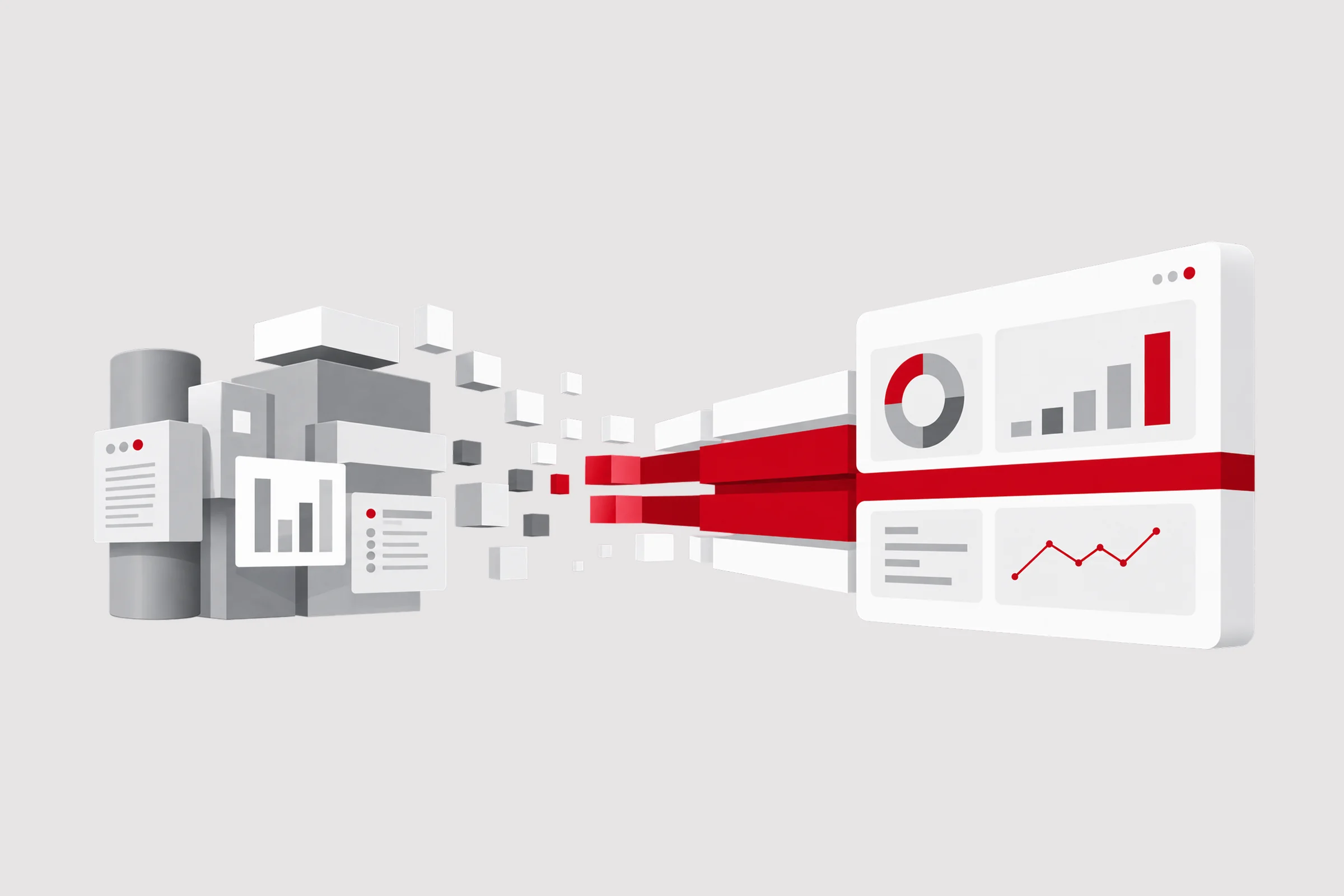
From roughly 25 days to 6 days of effort per workbook
A retail organization with 25,000+ users migrated 300+ Tableau workbooks and 350 extracts across a 200 TB environment, and adoption grew 300% in the first year.
Read the story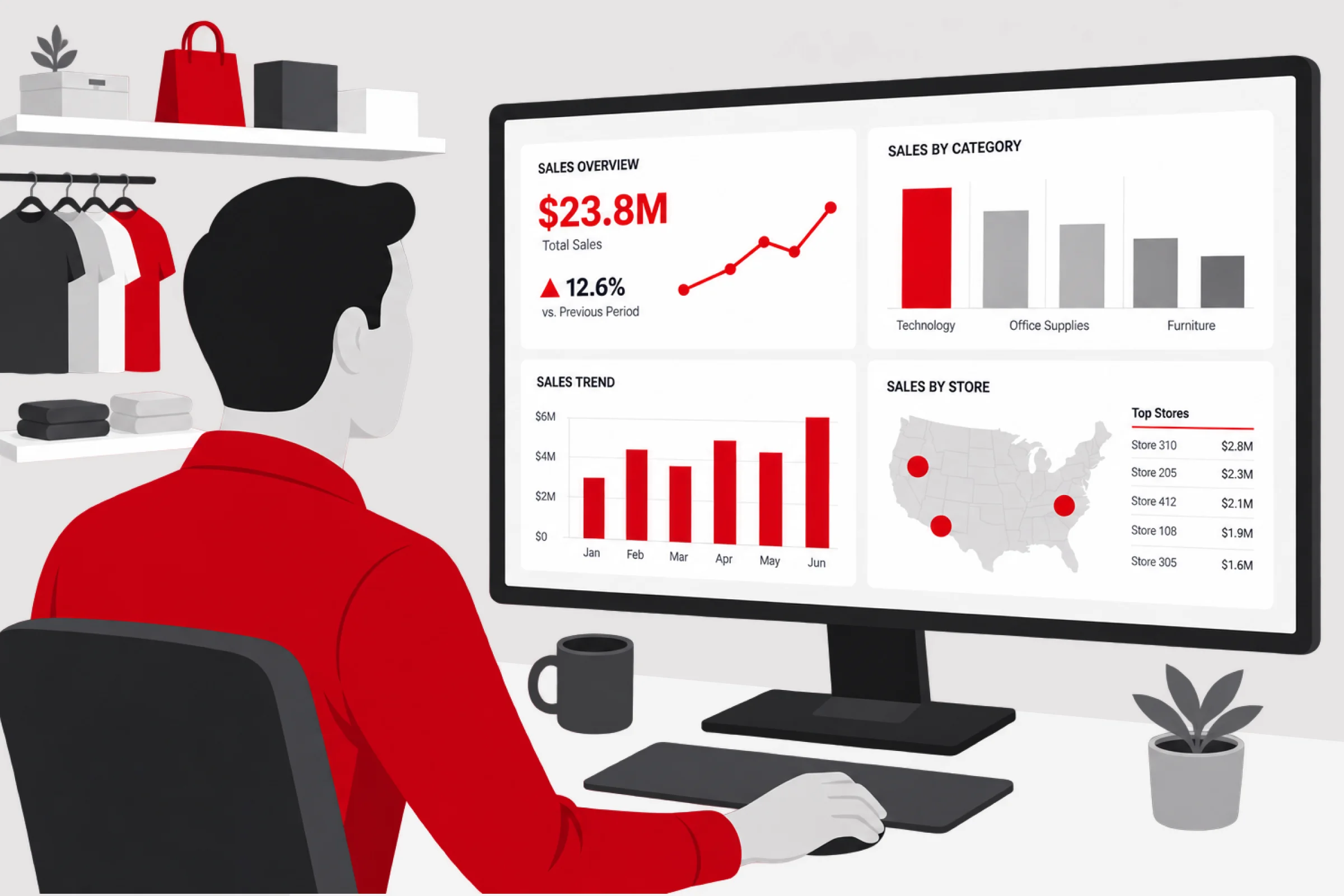
Retail sales reporting, MicroStrategy to Power BI
A Fortune 500 retailer consolidated 150+ reports into 5, then retired its MicroStrategy licenses.
Read the story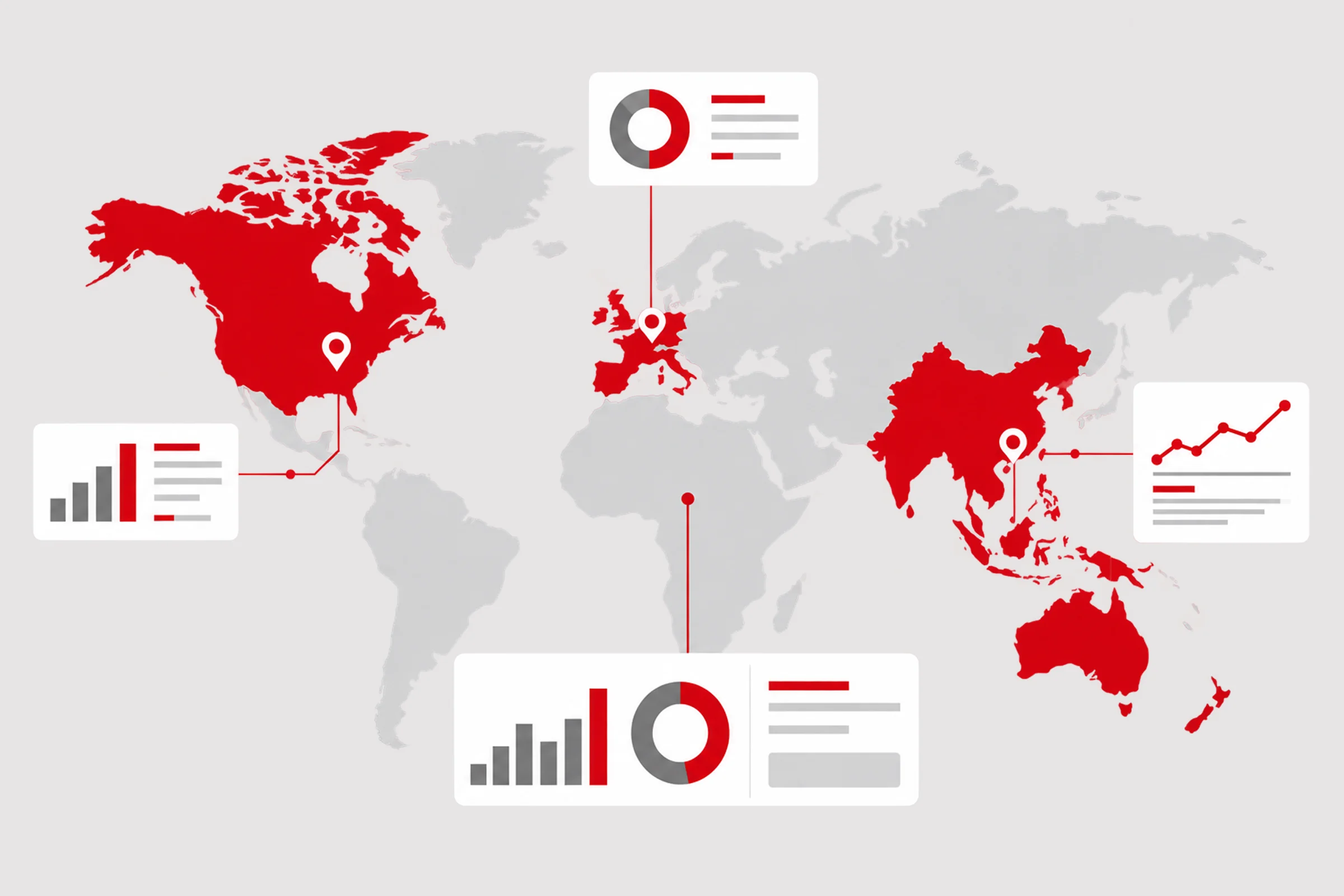
Legacy Qlik reports rebuilt in Power BI
A logistics leader in 60+ countries migrated region by region and retired its Qlik license.
Read the story